Additional Pictures
Date: 2002.02.20
|
|
Gas Hydrate Research Well Program Additional Pictures Date: 2002.02.20 |
|
| THUMBNAIL | NAME | REMARKS | DEPTH (m) |
|---|---|---|---|
|
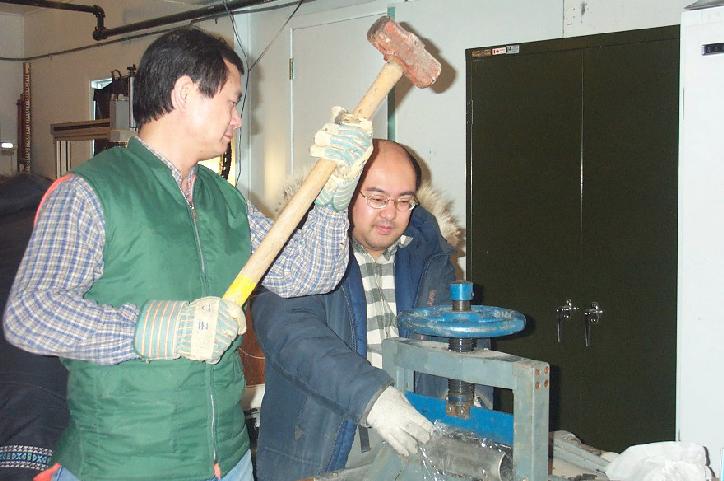
UN_sediment_92.jpg | Hiroshi Oda (JNOC) and James Zheng (GSC) are shown here trying to split a core. The frozen core has to be split in half for processing in the sedimentology lab, but it is very hard and so the guilitine shown here is used to break the core in half. | n.a. - n.a. |
|
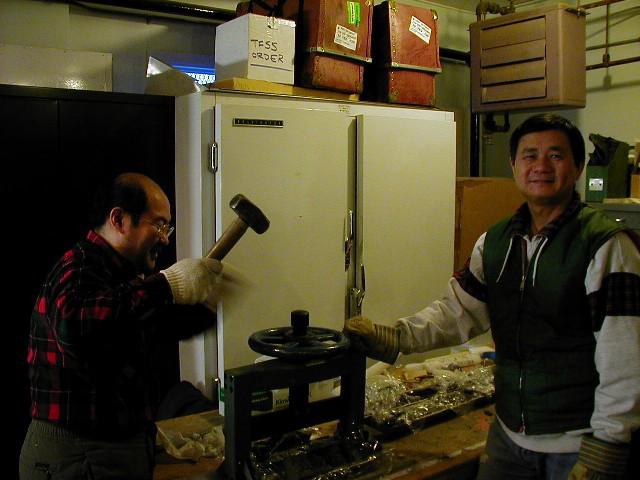
UN_sediment_93.jpg | Often the core is so hard that it needs to be hammered repeatedly to get it to break. Because of the time it takes to split and process the core, no more than 20 cores can usually be processed each day. | n.a. - n.a. |
|
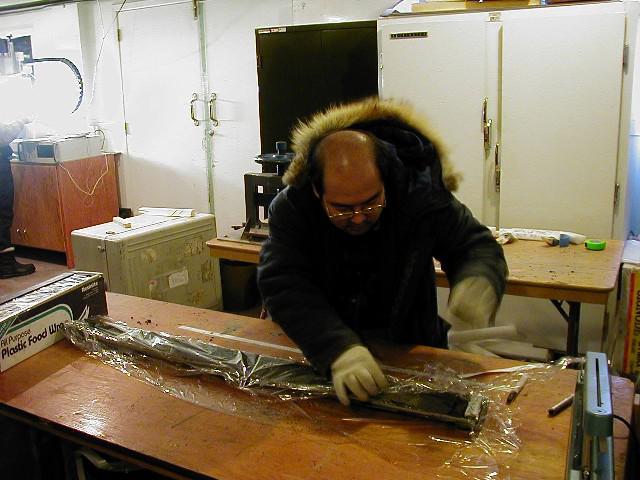
UN_sediment_94.jpg | Hiroshi Oda (JNOC) is wrapping up a core to prepare it for long-term storage after it has been processed in the sedimentology lab. Each core is split into an Archive, photographed but not heavily sampled, and a Work, which is heavily sampled. | n.a. - n.a. |
|
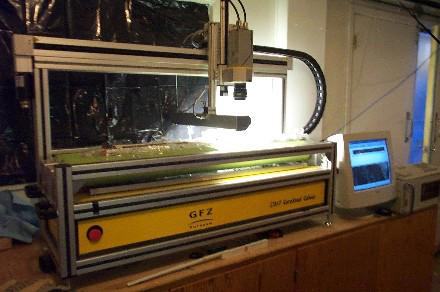
UN_sediment_95.jpg | The GFZ-Core-Scanner is now in full action in the cold sedimentology lab. It makes digital high resolution pictures of the archive halfs of the frozen cores. | n.a. - n.a. |
|
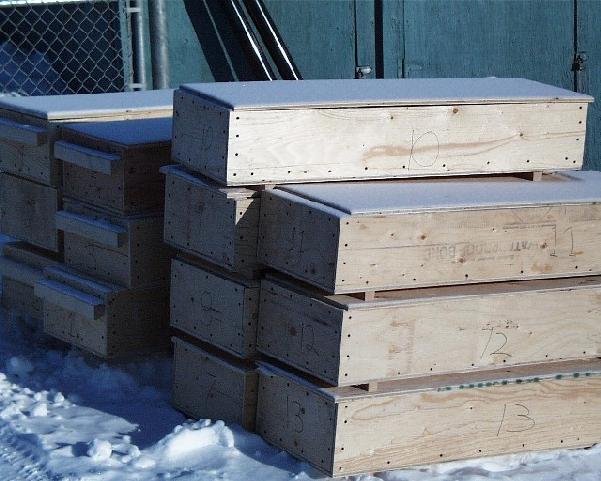
UN_sediment_96.jpg | After each half is wrapped separately the two halves are rejoined in the core boxes. | n.a. - n.a. |
|
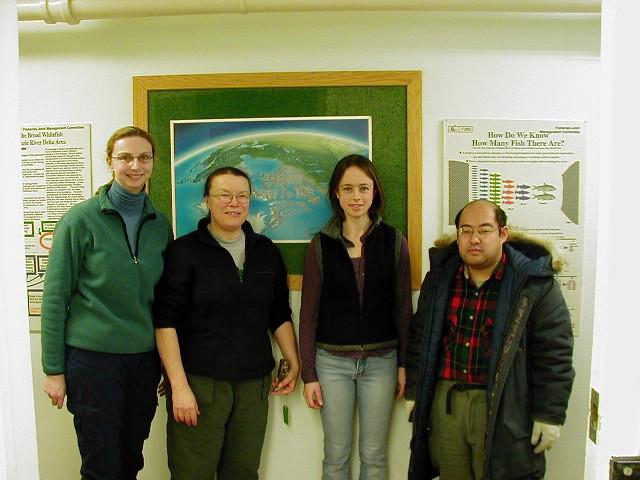
UN_sediment_97.jpg | Shown here is the group that worked each day in the cold sedimentology lab, sampling the working half of the core. From left to right: Barbara Medioli, Pat Brennan-Alpert (GSC), Adrienne Ethier (University of Ottawa), and Hiroshi Oda (JNOC). | n.a. - n.a. |
|
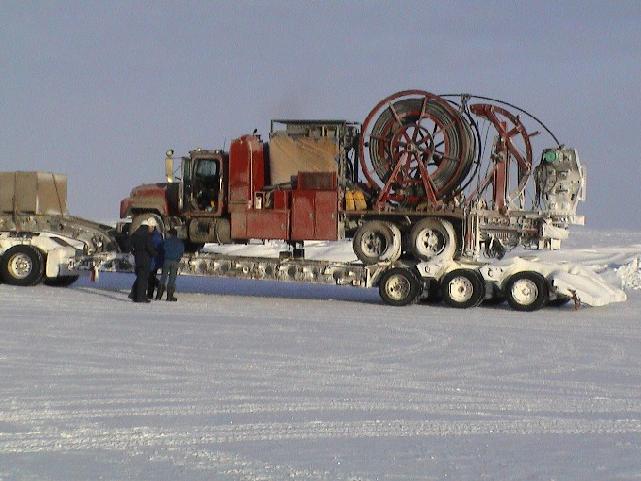
UN_tundra_7.jpg | The trailer of the Coiled-Tubing Rig for the Mallik4L-38 well hole. | n.a. - n.a. |
|
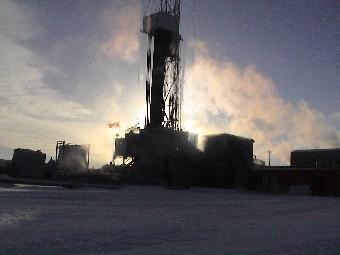
UN_tundra_8.jpg | The Mallik drill rig | n.a. - n.a. |